

Build What Can Stand: A Different Look at Reentry Readiness
- Dawn Rook

- Jun 8
- 4 min read
From Survival Shelter to Strong Foundation
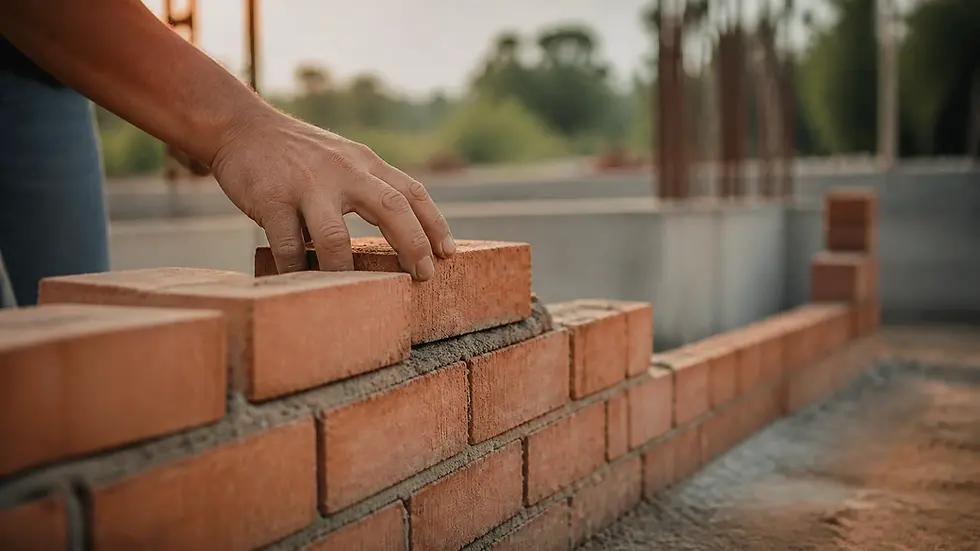
I have been thinking about the familiar story of three small houses built from straw, sticks, and brick. Most of us remember the lesson as simple: the brick house stood, so brick was best. But I keep coming back to a different question: what did the first two houses teach?
In real life, we do not always get to start with brick. Sometimes we build with what we have. Sometimes we build with what helped us survive. Sometimes we build quickly because life does not give us time to build slowly. That does not mean the first attempt had no value. It means the first attempt taught something.
The house made of straw may have been quick. It may not have lasted, but it still tells us something about survival, limited resources, and doing what can be done in the moment. The house made of wood may have had more structure. It was stronger than straw, but still not strong enough for the pressure that came against it. The house made of brick stood, not because it was perfect, but because it was built with stronger material, more preparation, and a better understanding of what it needed to hold against.
That is where my mind goes when I think about reentry readiness. In our work, we see learners who are not starting from nothing. They bring experience with them. They bring habits, survival skills, strengths, fear, hope, frustration, and sometimes a real desire to do something different. The question is not, “Why did you build with straw?” The better question is, “What helped you survive, what did not hold, and what do you want to build stronger now?”
Justice-impacted learners are often expected to return to work, family, community, responsibility, and daily life with a stronger foundation than they may have had before. They may be told to make better choices, communicate differently, manage stress, find employment, complete requirements, and stay on track. Those are important goals, but they are hard to carry without the right foundation underneath them.
MaxxContent’s work sits in that preparation space. Through structured content and guided learning paths, we provide a place to start. Learners can explore what is expected, recognize what they already carry, and identify what may need to be strengthened as they move forward.
Reentry is bigger than any one program, platform, or provider. MaxxContent’s role is preparation. Through the MaxxPaths ecosystem, we help learners strengthen the foundation before the next step.
MaxxPaths supports self-directed learning and can also stand beside the professionals already doing the work: teachers, facilitators, case managers, and program staff. In some settings, a learner may move through content independently. In others, MaxxPaths may become part of a classroom conversation, a structured program, or a guided discussion.
The ecosystem provides structure, but teachers and facilitators bring connection, guidance, and real-life context. The learner brings effort, experience, and the willingness to build. When those pieces work together, the foundation can become stronger.
That is also why I keep thinking about the part of the story we rarely talk about. After the storm, why stop with only one house that could stand? Why not take what was learned from every attempt and build something stronger together?
A house falling does not mean the whole story is over. It can reveal what was missing, where support was needed, and what may need to be strengthened before building again. The real lesson is what happens next: whether we keep building the same way or learn from the experience and build better.
That is how I see preparation work. We do not shame the straw, because sometimes straw is what someone had. Sometimes it is what helped them get through a hard season. We do not pretend the wood was enough, because structure matters, but some structures still need reinforcement. And we do not act like brick appears out of nowhere, because stronger foundations take time, tools, guidance, and practice.
The goal is to help learners look at what they have built, understand what held and what did not, and begin building with more. Sometimes that means strengthening how they communicate, how they manage pressure, or how they understand workplace expectations. Sometimes it means building the skills and confidence to take the next step without feeling lost. Preparation sits in the space before the stakes are higher. It gives learners room to work through ideas, notice patterns, build confidence, and strengthen skills before they have to use them in real time.
A stronger foundation does not remove every challenge a learner may face after release, supervision, or transition. What it can do is give the learner something to draw from when choices become harder, pressure increases, or old patterns begin to show up. That is where preparation supports the larger goal of reducing recidivism: not by promising a perfect outcome, but by helping learners recognize what they have practiced and use it with more confidence.
At MaxxContent, we believe learners deserve the chance to build with more than what they had before. Through the MaxxPaths ecosystem, we provide structure, learning pathways, and readiness tools that can support learners, teachers, facilitators, programs, and community partners — not because learners are starting from nothing, but because they are ready to build with more.

Comments